One proprietary low-temperature process converts a city's sorted municipal solid waste into industrial carbon, fuel oil, and potable water, with nothing sent to landfill.
A liability on one side. Carbon demand on the other.
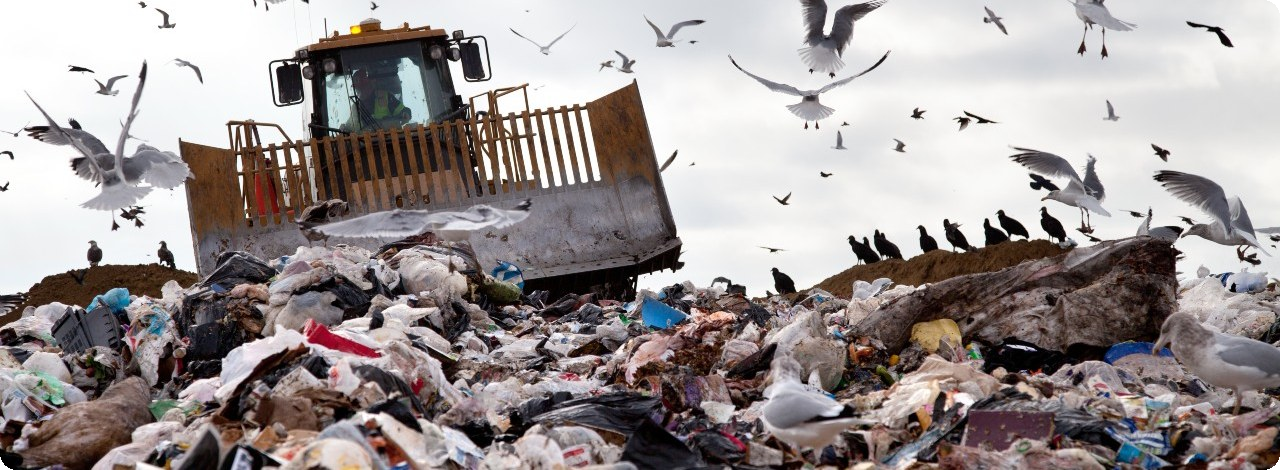
A city of one million people generates about 1.1 million tonnes (1.22 million short tons) of municipal solid waste each year, and pays to bury it. Landfills are one of the largest anthropogenic methane sources.
At the same time, demand for industrial carbon and fuel keeps climbing. The same waste a city pays to dispose of is a dense carbon carrier.
TiPs turns that liability into product. Tipping fees a city already pays become an input-side revenue line that neither tires nor coal can offer.
A city pays to bury this waste. TiPs turns that liability into carbon, fuel, and water.
1.1M t Tonnes of municipal solid waste a year from a city of one million (1.22M short tons).
2B+ Tonnes of MSW generated worldwide each year, heading to 3.8 billion by 2050.
245K t Tonnes of carbon recovered each year (270,000 short tons) for concrete and steel.
337M Litres of potable water recovered each year, returned to the city.
Nothing is wasted.
Every tonne of dry municipal waste separates into four recovered streams. Select a stream to see where it goes.
Carbon · 31% Fuel oil · 25% Mineral residue · 24% Process gas · 20%
Carbon · 31%
Robust industrial-grade carbon recovered from the dry feedstock, sold into bulk materials markets.
Use cases
- Advanced concrete
- Soil enrichment and agriculture
- Metallurgical carbon for steel
- Bulk industrial carbon
Size of the industry
- About 4 billion tonnes of cement are produced each year, a vast outlet for affordable bulk carbon.
- Steelmaking consumes more than 500 million tonnes of metallurgical coke a year, a market clean carbon can enter.
Fuel oil · 25%
Industrial oil recovered from the hydrocarbon fraction, sold as a robust industrial grade.
Use cases
- Industrial heating
- Marine and bunker fuel
- Refining feedstock
- Diluent blending
Size of the industry
- The global fuel oil market is worth roughly $190B a year.
- Marine shipping alone burns more than 300 million tonnes of bunker fuel a year.
Mineral residue · 24%
The mineral fraction of the waste, recovered as a feed for cement and construction materials.
Use cases
- Supplementary cementitious material
- Road base and aggregate
- Concrete filler
Size of the industry
- Supplementary cementitious materials are a global market worth more than $17B a year.
- About 4 billion tonnes of cement are produced each year, a vast outlet for affordable bulk carbon.
Process gas · 20%
Syngas captured during processing. It runs the dryer and the unit in a closed loop, with recovered moisture returned as potable water.
Use cases
- Runs feedstock drying
- Powers the facility
- Closed loop after startup
- Zero external fuel
Size of the industry
- Not sold: it replaces purchased fuel, so the plant runs with zero external fuel after startup.
- The recovered moisture comes back as potable water: 337M litres a year, roughly the daily water needs of 6,000 people.
Modeled output for sorted, dried municipal waste, before recovered moisture. Municipal waste is the most variable feedstock: the split shifts widely with the city and its sorting, so each project is built on the actual waste characterization rather than a fixed assay.
How TiPs compares
Municipal waste has two incumbent routes: burn it or bury it. TiPs replaces both with material recovery and recovered water.
| TiPs | Pyrolysis | Mass-burn incineration | Landfill | |
|---|---|---|---|---|
| Process | Sealed, low-temperature depolymerization of sorted, dried waste. | High-temperature thermochemical cracking, 400 to 800°C. | High-temperature combustion, 850°C and above. | No processing. Waste buried in the ground. |
| Products | Carbon, fuel oil, potable water, mineral residue. | Fuel oil, low-grade char, syngas. | Heat and power, with fly ash and bottom ash. | None. The material value is lost. |
| Material value | Preserved and sold into industrial markets. | Partially destroyed, lower-value byproducts. | Destroyed in combustion. | Stranded and lost. |
| Environmental | Zero waste to landfill, water recovered, no combustion. | Energy-intensive, char disposal issues. | Dioxin and NOx emissions, hazardous fly ash. | Methane, leachate, and permanent land use. |
| Deployment | Modular, distributed, at one landfill or several. | Large centralized plants. | Large centralized plants. | Permanent land use and long-term liability. |
800K t/yr Dry feedstock processed across six TiPs processors at one facility (880,000 short tons).
TRL 8 Technology readiness proven across 10,000+ hours of full-scale operation.
Modular Deployable at one landfill site or several, sized to the city.
Take the full project with you.
SENS delivers waste-to-value solutions at scale. Whether you represent a municipality, a government, a waste operator, or an investment fund, we invite you to explore what TiPs can do with municipal solid waste in your region.
SENS · Municipal Solid Waste Full project brochure, including the project economics (PDF)